My wife and I just returned from an intense, six-day trip to Washington, D.C. Our goal was simple, if exhausting: to see as many monuments and museums as humanly possible in that short window of time. Fortuitously, whether by intentional planning or pure happenstance, we walked away with a profoundly important realization.
Not having visited our nation’s capital since the early 1990s, I found that many details had faded from my memory or been entirely overlooked during my previous brief stay. Perhaps for this very reason, I was deeply struck by the staggering level of detail woven into the city’s monuments.
Art as the Foundation of Identity
In D.C., art is everywhere. In the Capitol building, ornamental designs are omnipresent. Take the Rotunda: the paintings in the ceiling, soaring high above the immediate perception of any visitor, were intentionally populated with symbolic figures. They seamlessly blend contemporary history—specifically the Revolutionary War and the early years of the United States—with Greek mythology and its rich symbolic energy. Alongside these, Christian symbols and other significant motifs speak, in pure artistic form, of the ideals, goals, hopes, and identity of a newly minted nation.
These expressions aren’t confined to canvas. They are alive in the physical buildings labeled as monuments, the outdoor sculptures, the statues, and the ornamental reliefs on the facades of federal buildings (a feature that is structural, rather than merely decorative, across Washington’s grid system of streets, blocks, and parks).
These observations speak to a larger truth: intentional design and multi-faceted artistic expressions have endured for more than two centuries to create a collective memory for this nation, spanning the descendants of the original population to the newest immigrants.
The Arlington Experience
Throughout the trip, a question swirled in my mind about the true importance of these symbols and artistic creations. From a strictly pragmatic standpoint, they are not “necessary,” yet they are ubiquitous.
The moment when everything finally coalesced—the moment I truly noticed that the visionaries and artists saw a “necessity” for symbolic artifacts, precise movements, and ritual actions—was while watching the Changing of the Guard at the Tomb of the Unknown Soldier in Arlington National Cemetery.
From a pragmatic perspective, the near-mechanical movements of those soldiers, the flawless exactness of their steps, and the robotic inspections of their weapons and uniforms are not strictly required to protect the tomb from vandalism or destruction. The guard’s stated goal is protection, yes, but the rigid choreography created for the ceremony is something else entirely: it is a dramatic art form heavy with intentional meaning. As I watched, my mind gathered all the visual art I had observed throughout the city and began to contemplate “why” we create such drama.
Compared to older monuments, this particular ritual is fairly recent; it was implemented in 1948 and has continued 24/7 ever since. Yet, just like the statues and physical architecture across the Potomac, it reflects a deep, perhaps subconscious understanding: artistic form celebrates and communicates meaning, embedding memory into the hearts of individual human beings and the collective soul of a nation.
The Precision of Symbolism
My mind continued to race. What historical blueprints were they following to create these expressions? There is, indeed, a historical subtext to explain the specific meaning behind these actions and structures. For instance, in the case of the guard at the Tomb of the Unknown Soldier, a series of “21s” dictates every movement: 21 steps from one side of the black mat to the other, 1 second per step; there is a precise 21-second pause before the guard continues to march back. This number is historically linked to the 21-gun salute, the highest military honor. Digging deeper into maritime history, the subtext suggests the number reflects the custom when ships entering a harbor would fire cannon salvos. From the shore, 3 salvos were fired. Thus, seven times three became the ultimate standard, affirming that the arriving ship and the coastal inhabitants were at peace.
But this type of subtext, which I eagerly try to find out, is not all that was swirling in my mind. What I truly want to know is: How did the designers, planners, and sculptors know to use these specific expressions in the first place? How did they know this was vital to building a nation? How did they understand—in a way we often miss today—just how essential artistic forms are to creating identity and maintaining history? What college course in their days taught that? Or did it?
Did the fields of art, philosophy, and theology work together more holistically in the past? Or was it a foundational, intuitive understanding of beauty and order—an understanding we have swept away by strictly dividing academic fields and isolating art into its own elite, functionless silo?
Form, Completion, and the Divine Mandate
While it isn’t my practice to bend biblical scripture beyond its original intent, I find myself asking a fundamental question: Is it significant that when God created the earth, it was initially “without form, and void”? Was the act of ‘giving form’ the essential creative movement reflected in human art? Is created, non-accidental form a prerequisite for completion?
What if placing ideas, goals, aspirations, memories, and visions into an artistic framework is not just a “nice addition”? What if creative form is so intricately bound to completion that it makes “e-art-h without art just… eh”?
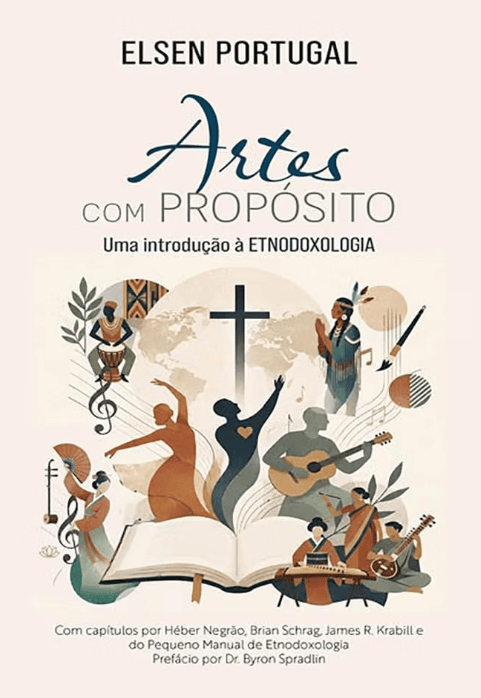
If artistic expressions are truly essential for thorough, integral communication to occur, then the arts can no longer be treated as a mere addendum to the main body of our cultural text. They must be part and parcel of how we communicate. Content, no matter how truthful, lacks transformative power when it lacks the form required to move the human spirit.
Consider this through a theological lens. Jesus commanded His disciples to preach the Gospel. The Gospel cannot be substituted, and it is absolutely true. Yet, truth that cannot be grasped or felt remains locked away in a closet, undiscovered.
Mankind did not invent the arts. We create art using the innate abilities lent to us by our Creator, but the very concept of communicating through form is a God-given aspect of human existence. To echo the old television show: “Father Knows Best.” God, our Father, knows exactly what we need. We create art forms in obedience to the cultural mandate left to us, applying it to the memories, messages, and directives we receive from Him.
Theology can be rock-solid and completely true. But art is the indispensable vehicle required to carry that truth directly into the hearts and minds of individuals, where it can finally bear fruit.



Leave a comment